
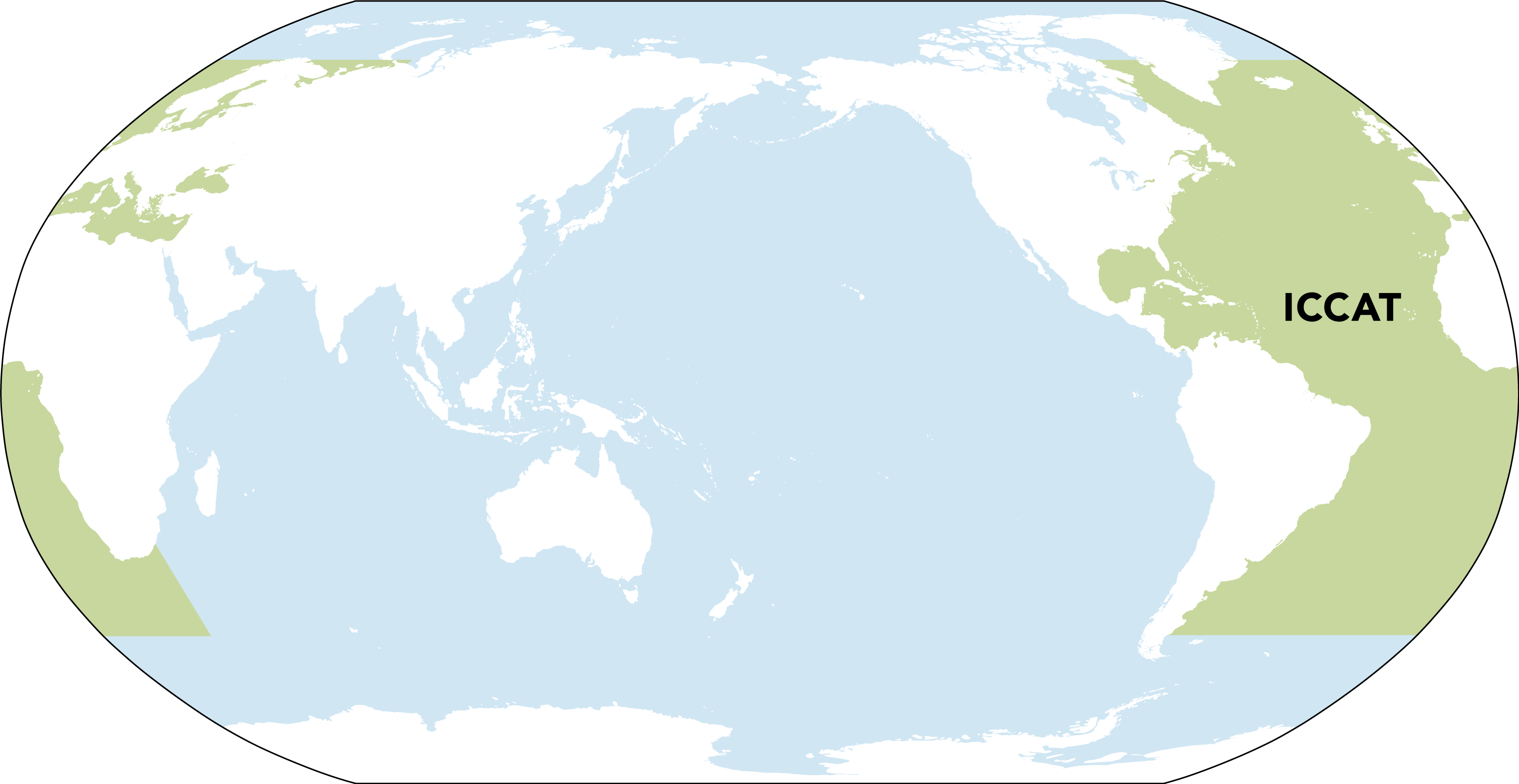
ICCAT – International Commission for the Conservation of Atlantic Tunas
ICCAT Primary Ask
Adopt further improvements to, and extend, the tropical tuna measure adopted in 2021.
Specifically, in 2022, ensure that the bigeye and yellowfin stocks are maintained at sustainable levels following ICCAT SCRS management advice, fully allocate the TACs, and adopt procedures to identify and address non-compliance with TAC allocations.
ICCAT Crosscutting & Specific Asks
- Accelerate the adoption and implementation of comprehensive, precautionary harvest strategies. Specifically in 2022, accelerate the development of management strategy evaluation (MSE) for all tropical tuna stocks; adopt a harvest strategy for western Atlantic skipjack; adopt a harvest strategy for western and eastern bluefin tuna.
- Accelerate the development (through the EMS Working Group) of minimum standards for an electronic monitoring program and a timeline for the implementation of an ICCAT EM Program by 2023. Require 100% observer coverage (human and/or electronic) for all industrial ICCAT fisheries, including support vessels and all those engaged in at sea transshipment, by 2024.
- Strengthen ICCAT protections for sharks, by extending the retention ban for shortfin mako in the North Atlantic and adopting a complementary prohibition for the South Atlantic. Improve ICCAT’s finning regulation to require fins naturally attached for ALL sharks without exceptions, thereby adopting the globally acknowledged best practice to prevent finning.
- Strengthen FAD management provisions in line with the NGO Tuna Forum’s Aligned Guidance on FAD Management. Specifically in 2022, require only fully non-entangling FAD designs without netting or other meshed materials, establish a timeline for transitioning to 100% biodegradable FADs, require the timely provision of all FAD data necessary to confirm/validate the implementation, and assess the efficacy of the FAD closure in advance of the next ICCAT Annual Session. In 2023, require the provision of near real-time FAD position and acoustic records data for broad scientific use; and develop a fully transparent FAD-recovery policy, a FAD marking scheme, clearer rules for FAD ownership and stronger rules for activation and deactivation of FAD buoys.
ICCAT Letters

RFMO Secretariat Virtual Meeting Suggestions February 2021